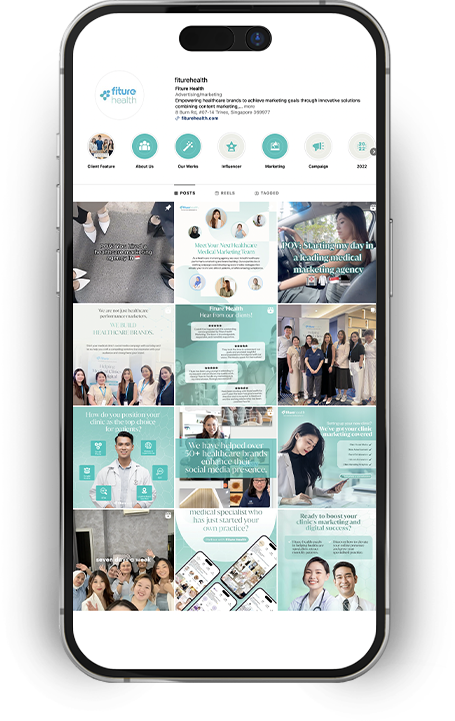
Social media has become a routine part of running a medical practice in Singapore. With patients regularly checking clinic credentials before scheduling an appointment, online visibility directly influences a practice’s standing. Medical practitioners face a clear requirement: they need to share helpful health information while strictly following statutory advertising laws and medical council rules. Balancing straightforward public education with regulatory compliance is necessary for any clinic aiming to build lasting trust in Singapore.
Why Social Media Marketing matters for Medical Practices in Singapore
The need for an organized social media presence comes from clear shifts in how patients look up health information. People across Singapore no longer rely solely on street-level clinic signage or recommendations from friends and family. When experiencing persistent symptoms or looking for preventive health advice, they go online to compare treatment options, clinic locations, and doctor qualifications. When qualified healthcare providers are absent from these channels, patients more easily encounter inaccurate medical claims.
Private practices also operate in an increasingly competitive environment, from medical clusters in Novena and Orchard to neighborhood clinics in heartland housing estates. Standing out requires an emphasis on professional standards rather than retail promotions. Publishing regular educational content helps a practice remain familiar to patients over time. Instead of pushing for immediate visits, consistent educational posts build patient confidence. When medical needs arise, people naturally turn to doctors who have already demonstrated clear clinical knowledge, transparency, and professional empathy.
An active social media presence also supports a clinic’s wider web visibility. Publishing accurate medical articles and posts complements technical work such as healthcare SEO in Singapore, keeping the practice visible on search engines and social platforms when patients search for specific health topics.
Practical Social Media Strategies for Singapore Medical Clinics
Running social media for a medical practice requires an organized approach based on clinical evidence. The following strategies help clinics maintain an informative digital presence while safeguarding medical ethics:
1. Choosing platforms that match patient demographics
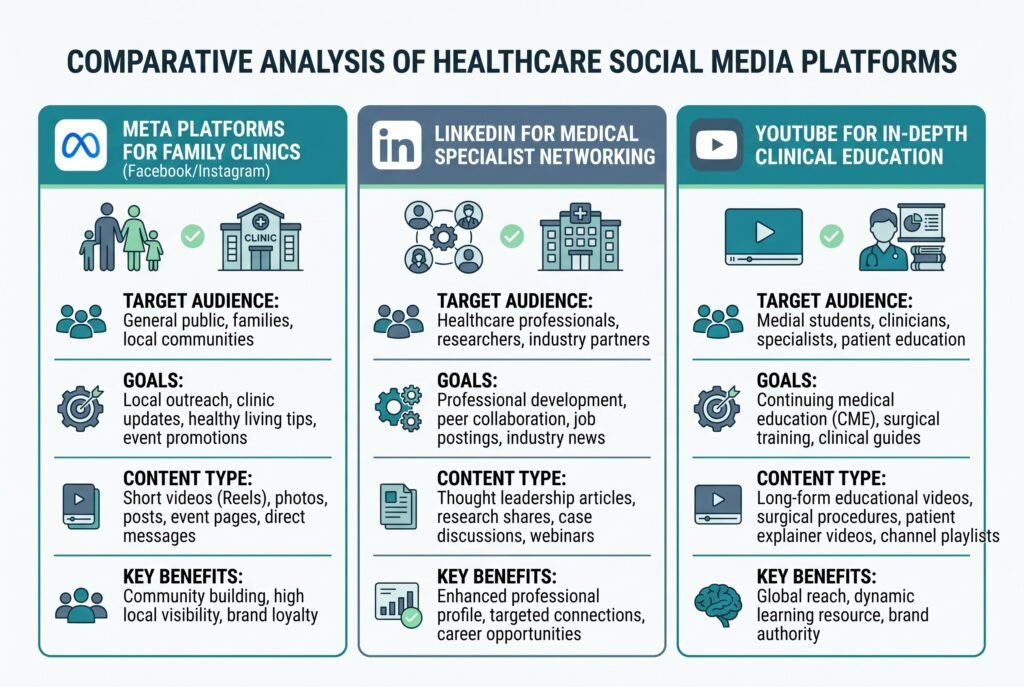
Different social platforms cater to different age groups and reading habits. Clinics should invest their time on channels where their patients actually look for healthcare information:
- Meta platforms (Instagram and Facebook) work well for general practitioner (GP) clinics, dental practices, paediatricians, and dermatologists. Informative graphics, carousel slides, and short video clips make it easier to explain everyday medical concerns to working adults and young families.
- LinkedIn is well suited for specialist clinics, day surgery centers, and diagnostic facilities that depend on doctor-to-doctor referrals. Specialists can share clinical case discussions, medical literature summaries, and healthcare governance topics to connect with professional colleagues.
- YouTube fits longer explanatory videos, surgical overviews, and procedure preparation instructions that require step-by-step clinical explanations.
2. Evidence-based educational content themes
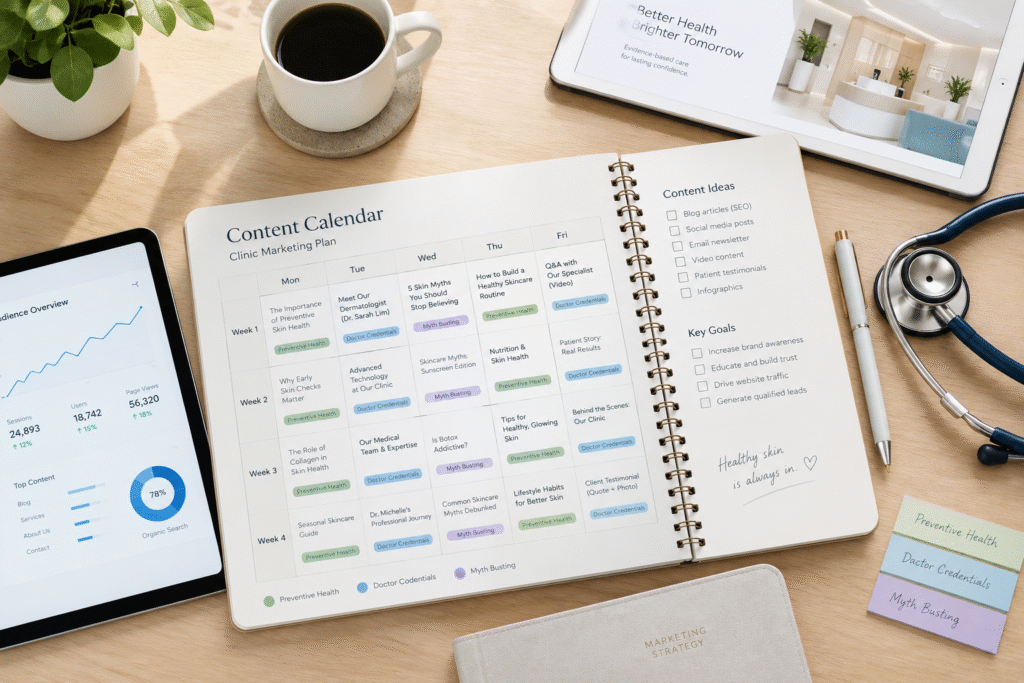
Social posts must remain anchored in scientific evidence and clinical objectivity. A practical content calendar usually revolves around three core themes:
- Preventive healthcare and early diagnosis: Share practical guides on managing chronic conditions prevalent in Singapore, including diabetes, hypertension, and cardiovascular risks, accompanied by realistic lifestyle suggestions.
- Factual doctor credentials and clinic facilities: Introduce doctors by stating their registrable qualifications, approved subspecialties, and clinic accreditations without exaggeration. Pair these with clear photos of consultation rooms and diagnostic equipment so patients know what to expect.
- Correcting common health myths: Address viral wellness trends and common home remedy misconceptions in plain language that reflects current clinical guidelines.
3. Patient interaction guidelines and account moderation
Interacting with the public on social networks brings legal and ethical responsibilities that require definite operational rules:
- Clear boundaries on digital consultations: Add prominent disclaimers in profile bios and automated message replies stating that direct messages and comments cannot provide clinical diagnoses, triage, or prescriptions.
- Compliance with the Personal Data Protection Act (PDPA): Ensure that neither staff nor patients post national identification numbers (NRIC), phone numbers, or private medical histories on public feeds. Direct all patient appointments to secure clinical booking portals.
- Managing patient feedback: Maintain written standard operating procedures (SOPs) for addressing patient concerns constructively. Acknowledge complaints politely, avoid discussing private health details in public comments, and transition sensitive issues to private phone or email channels promptly.
Paid social ads allow practices to share preventive health information with specific local neighborhoods. Compliant campaigns follow several clear principles:
- Local geographic targeting: Limit ad distribution to sensible travel distances around physical clinic locations, reaching nearby residents and people working in the area.
- Educational messaging first: Base ad campaigns on awareness for routine health screenings, vaccination timelines, or chronic disease management rather than commercial price deals.
- Meaningful performance indicators: Track campaign success through signs of genuine interest, such as saved posts, complete video views, and clinic website visits, rather than passive impression figures.
Regulatory Compliance: MOH, HCSA, and Advertising Codes
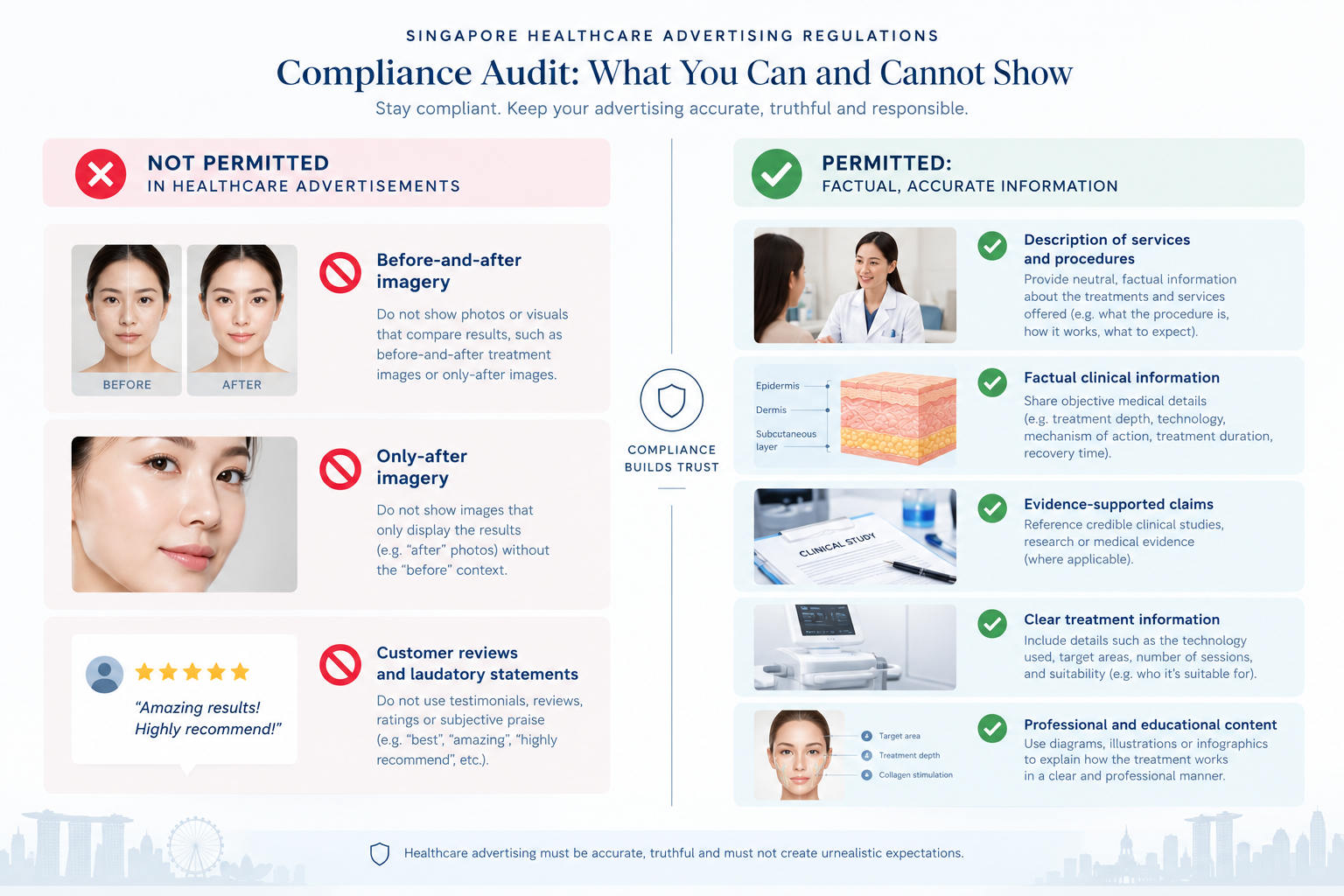
Healthcare advertising in Singapore is closely regulated to protect patients and maintain medical standards. The governing framework shifted from the Private Hospitals and Medical Clinics Act (PHMC) to the Healthcare Services Act (HCSA), establishing consistent accountability across all licensed healthcare providers. Registered doctors must also follow the Singapore Medical Council Ethical Code and Ethical Guidelines (SMC ECEG), while traditional medicine practitioners adhere to directives from the Traditional Chinese Medicine Practitioners Board (TCMPB).
Clinic managers and marketing teams must adhere to several specific rules:
- Patient testimonials and endorsements are prohibited. The Ministry of Health (MOH) strictly forbids clinics and doctors from publishing patient reviews, celebrity endorsements, or subjective statements praising treatment results.
- Comparative before-and-after photographs are banned. Publishing side-by-side transition pictures of aesthetic or medical procedures on public accounts is prohibited because it fosters unrealistic clinical expectations.
- Superlative and unverifiable claims are not allowed. Marketing copy must avoid expressions such as “the best,” “top-rated,” or claiming treatments are “painless.” All statements must remain objective and verifiable.
- Commercial discount schemes are excluded. Social campaigns must never feature price reductions, package giveaways, flash-sale countdowns, or patient referral incentives, as these practices commercialize healthcare delivery.
- External web links must be compliant. Any social media post or advertisement directing traffic to an outside page must lead to a clinic website that fully complies with HCSA advertising regulations.
Working with a Specialized Healthcare Marketing Agency
Running a social media account for a medical practice requires balancing creative presentation with strict regulatory requirements. General marketing agencies often lack familiarity with the detailed requirements enforced by MOH, HCSA, and professional medical boards, which can expose clinics to regulatory penalties.
A specialized agency supports clinics by:
- Writing accurate educational copy that translates technical clinical guidelines into patient-friendly language without misrepresenting medical facts.
- Conducting systematic compliance reviews to confirm that all captions, images, and video scripts meet HCSA and SMC ECEG standards before publication.
- Managing daily content planning and community moderation so physicians can focus their schedules on direct patient care.
How FitureHealth Works with Clinics in Singapore
Fiture Health provides advisory and production support for medical practices and specialist clinics across Singapore. Because a clinical reputation takes years of dedicated service to establish, we focus on communication strategies that meet high ethical and professional standards.
Our team coordinates clinical topic planning, educational content creation, and compliance reviews under Ministry of Health regulations. Rather than chasing short-lived social media gimmicks, Fiture Health builds steady educational campaigns that establish your doctors as trusted healthcare resources in the community.
Conclusion
Building a dependable social media presence for a clinic in Singapore requires consistent public health education, strict patient privacy protection, and disciplined compliance with local advertising laws. By sharing informative posts and communicating professionally, your clinic can develop lasting patient trust. To review your practice’s social media compliance or discuss an organized digital strategy, connect with our advisory team through WhatsApp Consultation or submit an inquiry via our contact form.
Frequently Asked Questions
Are Medical Clinics in Singapore allowed to run paid Advertisements on Social Media?
Yes. Licensed clinics in Singapore can run paid social media advertisements as long as the material is strictly factual, educational, and dignified. Ads must not include discounted pricing, commercial package promotions, or claims of clinical superiority, in accordance with MOH and HCSA advertising regulations.
No. Under Ministry of Health regulations and the SMC Ethical Code, healthcare facilities and registered doctors are strictly prohibited from publishing patient testimonials, endorsements, or subjective satisfaction reviews on any public marketing platform, including social media.
How Does HCSA Regulation impact Doctors who Create Educational Video Content?
The Healthcare Services Act allows doctors to share public health information. Doctors can produce educational videos as long as the discussions remain objective, medically sound, purely educational, and free from self-praise or guaranteed treatment results.